Nitai Cosmetic Clinic Melbourne Call Nitai Cosmetic Clinic Welcome - You have 0 item in Cart
view cart and check out
 

Skin Cancer

Skin Cancer Clinic | Skin Cancer Checks | Melanoma | Body Mapping | MoleMax HD System |

At Nitai Medical & Cosmetic Centre, our doctor has completed advanced training in the area of Skin Cancer detection and treatment. For all patients presenting for skin cancer checks, our doctor will conduct a thorough physical examination using her advanced training as well the Molemax HD system to analyse the suspicious mole(s). Dermoscopy images are taken using the MoleMax HD system where required.

Biopsies of all moles that are of concern are taken also for further pathology testing. Patients are recalled if the pathology results are returned positive. At this point our doctor removes all moles that return a positive result using an excision procedure.

We also offer a Full Body Mapping of all moles using the latest MoleMax HD System. Full Body Mapping is important for detection of new moles through future checks. New moles present a very high risk of developing into skin cancer if not treated early. We do recommend regular full body mapping checks to be conducted -our doctor will discuss this with you during the consultation.

At Nitai Medical & Cosmetic centre, A full Body Mapping is only available in conjunction with a full body check by our doctor. To maintain the highest Quality standards and achieve the most optimum result for our patients, that is, achieve lowest possible melanoma detection error, we believe that the both tests should be conducted particularly for medium/high risk patients. Not all patients may require a full body mapping procedure – your examining doctor will confirm whether you should have one or not.

In Australia, most people will develop various skin lesions. ‘A Skin Lesion’ is a general medical term for any disturbance or injury to one’s healthy skin appearance.

Skin lesions include all lumps and bumps that grow on our skin, such as moles and sunspots. Whilst most skin lesions are harmless and sometimes unslightly, skin cancer may develop and not always in sunexposed areas.

Let’s look at most common lumps and bumps and ways to remove them.

Keratoses

Also called age spots or sun spots, Keratoses is very common in Australians of Anglo-Celtic background from about age 30 and widely seen from age 50.

Solar Keratosis is the most common form found in sun-exposed areas such as forearms, scalp (especially if bald), legs and shoulders.

If untreated early, solar keratosis can develop into Squamous Cell Carcinoma with a risk in some people being 10%-15%.

What are solar keratosis?

Solar Keratoses are seen commonly as scaly lesions, more commonly in sun-exposed areas. These can be a pre-cursor to skin cancer. If treated early, skin cancer development can be prevented.

Who gets solar keratosis?

Individuals with fair skin and blonde & red hair are at most risk.

What causes solar keratosis?

Chronic sun exposure is the most common cause. Artificial UV light such as solariums can also cause solar keratosis.

How is it treated?

1. Cryotherapy

2. Curettage & Cautery

3. Topical therapy

4. Photodynamic therapy

How to prevent solar keratosis?

1. Avoid unnecessary exposure to the sun

2. Wear correct clothing

3. Use of sunscreen

4. Avoid solariums

5. Examine your skin regularly

6. Have a skin check with your doctor annually.

Common Moles

Moles are more or less uniform in colour , appearing around age of four. These are acquired genetically although sun exposure can have adverse effects.

One can develop Dysplastic moles, with variable pigment and ragged edges. Dysplastic moles can develop into melanoma.

Anyone with a family history of skin cancer or with unusual skin growths should get a complete skin check at least twice a year. If detected early, moles can be surgically removed.

Freckles

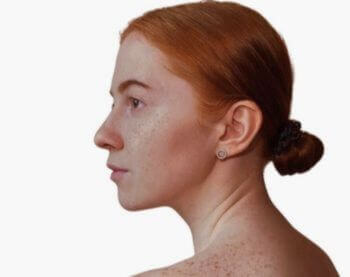
These are flat, evenly brown spots appearing across one’s face, upper body, arms or thighs, generally in clusters. People with many freckles and fair or red hair and blue or green eyes, have a higher risk of developing skin cancer.

Our GP will check to make sure freckles are not cancerous. At Nitai Medical & Cosmetic Centre, we can treat freckles with medical grade lasers.

Skin Cancer

Skin Cancer in Australia is caused primarily due to long exposure to sunlight (although smoking, linked to many types of cancer, also causes or worsens skin cancers). Skin cancer arises in normal skin or in benign sun-related lesions, moles, scars or chronically irritated areas.

Skin Cancers generally grow fast and look unusual but some cancers grow quite slowly for a long time before growing more rapidly.

Cancers do not go away , unlike sores or ulcers. They may appear to heal, only to reappear and break down again later.

Skin cancers do not usually look like other spots on our body – they are often disorganised and ragged in appearance. An ulcer sometimes forms in the middle. They are fragile and likely to bleed easily.

There are 3 types of Skin Cancers:

Basal cell carcinoma

Basal cell carcinomas are the found generally on the face and upper body – around the eyes, ears chin, nose, neck, collarbone, and cheeks. They are most common skin cancer. Basal cell carcinomas are generally raised, pearl-like in appearance with tiny blood vessels crossing its surface.

If detected very early, Basal cell carcinomas can be treated with a cream. Most , however, require removal surgically. Significant disfigurement can result if left untreated.

Squamous Cell Carcinoma

These are raised, flaky red nodules that often bleed and appear to heal again. Appearing mainly on one’s hands and forearms, face and other sun-exposed areas, Squamous cell Carcinomas spread quite fast, spreading to the lungs, brain and other parts of the body. Smoking can cause Squamous Cell Carcinoma.

Needless to say, all forms of Squamous Cell Carcinomas should be removed as soon as possible.

Melanoma

Rarer but more dangerous form of skin cancer, the risk of Melanoma in Australia is 5% (higher in males). Melanomas can be genetically acquired. They can appear as moles anywhere on the body and spread quire rapidly. Melanomas are generally dark pigment, sometimes with areas of brown, black, pink and even blue. A rapidly growing mole darker than and/or unlike others can be a sign of early melanoma.

All forms of Melanoma should be removed early through surgical means.

Our Doctor has received advanced training in detection and removal of skin cancers. Typically, she will remove the suspected area of skin along with a good margin of normal skin. The specimen will be sent away for pathology laboratory assessment.

How can I conduct my own self-examination?

Our skin changes constantly but moles generally do not change over a short period.

The key things to look for when you or your partner is examining your skin.

Change in size, shape, colour or pattern, Bleeding or itching.

Melanomas grow down through the skin as well as expanding in the surface area.

Aggressive Melanomas can spread rapidly through the body, they can become lighter or darker, change colour, grow or shrink.

If you notice any of the above changes consult your doctor immediately

If you require assistance with your skin condition, we can help.

Every patient presenting with a skin condition is reviewed by a doctor and an appropriate treatment and ongoing skin care plan is developed to suit your specific case.

To contact us please complete call (03) 9300 1244 or send us an email via our contact form on this page above. Your email will be forwarded to the appropriate staff member to respond.

Skin-Cancer-Checks-Melanoma-MoleMax-Body-Mapping-Skin-Cancer-Clinic

Welcome - You have 0 item in Cart
view cart and check out

Online Service Enquiry


Cosmetic Doctor
100

DR SHOBHNA SINGH


Qualifications
  • MBBS (Hons) Monash University 1992
  • DRACOG Royal Australian College of Obstetricians and Gynaecologists 1995
  • FRACGP (RACGP) 1997
  • Step1 and Step2 of United States Medical Licensing Examination (USMLE)
  • Certificate in Aesthetic Medicine – American Academy of Aesthetic Medicine
  • Certificate in Primary Care Skin Cancer Medicine – University of Queensland
  • Certified Sclerotherapist (Certificate of Sclerotherapy) 2010 – Australasian College of Phlebology
  • Currently Enrolled in study of Diploma of Skin Cancer Surgery & Medicine through Skin Cancer College of Australia & New Zealand (SCCANZ)
  • Currently Enrolled in study of Australian Diploma of Dermatology through Australian Institute of Dermatology

CURRENT

  • General Practitioner with special interest in Cosmetic Medicine. Current Director of Nitai Medical & Cosmetic Centre in Glenroy.
  • Fellow of Royal Australian College of General Practitioners.
  • Diplomat of Royal Australian and New Zealand College of Obstetricians and Gynaecologists
  • Member of Australasian Society of Cosmetic Medicine 2007-2010.
  • Member of Skin Cancer College of Australia & New Zealand
  • Associate Member of Cosmetic Physicians Society of Australasia.
  • Associate Member of Australasian College of Phlebology

CLINICAL MEETINGS

    Attended CPSA conference 2008 and 2009
    Dermoscopy workshop –Australian College of Dermatology 2009
    Skin Cancer Workshop Certificate-Australasian College of Skin Cancer Medicine 2009,2011
    Laser. Workshop 11/2008 @GPCE
    Laser Workshop 11/2009 @GPCE
    Sclerotherapy workshop –Australian College of Phlebology
    Attendance of training with Dr. Bill Anseline 8/01/2010 regarding photodynamic therapy and mole removal. Further training conducted in April 2010 on skin cancermanagement

CURRENT

    Studying for Diploma in Skin cancer Medicine, Skin Cancer College of Australia & New Zealand
    Commenced Diploma of Cosmetic Medicine (ASCM).

CLINIC TRAINING IN COSMETIC PROCEDURES

ANTI WRINKLE INJECTION

    Antiwrinkle Injection November 2009
    Antiwrinkle Injection Introduction training-2008
    Antiwrinkle Injection Advanced Training-2008,2009

DERMAL FILLER

    Dermal Filler Introduction training 2008
    Dermal Filler Advanced training 2008,2009
    Dermal Filler Lip Workshop. 2008,2009,2010,2011
    Dermal Filler cheek workshop 2009 (Dr Gavin Chan)
    Series of Laser Training Workshops 2008-2010
    ASAP Skin Products, Skin Peels / product training, Microdermabrasion Certification.
    ASPECT DR SKIN CARE- Completed training of skin care products/ skin peels

SCLEROTHERAPY

    Emergency Medicine Crisis Management Training (EMCM), Sydney Clinical Skills & Simulation Centre, Jun 2010

OTHER MEDICAL CLINIC TRAINING

    RACGP QA and CPD – Ongoing
    Participation in Australian Primary Care Collaboratives 2008/2009
    AGPAL certificate of Accreditation

Updated May 8 2012
Cosmetic Finance Available

FINANCE

This offer available is specifically designated for clients getting medical / cosmetic procedures.

Finance that works for you

Payment plans up to $40,000
Plans up to 84 months
Extended finance options to suit every budget
3 and 6 months interest free waiver options available
Finance all or part of your procedure
Over the phone transfer
Fast efficient approvals, simply apply online

To go directly to the Mac Credit website and apply click here


Please note that Nitai Medical & Cosmetic Centre, nor any of it's Staff is NOT  in any way associated
with the process of applying , reviewing or approval of the loans via MacCredit.  The Loan arrangement
purely exists between a Client and MacCredit.  Any direct benefit or risks  exist  between the Client and
MacCredit. Like any loan, the client is strongly encouraged to consider the need for it very carefully before
committing.